

Batch chemical reactors are fundamental pieces of equipment in the chemical industry, playing a crucial role in the synthesis and transformation of various chemical substances. As a reputable chemical reactor supplier, I am excited to share in - depth knowledge about how a batch chemical reactor works.
1. Basic Concept of Batch Chemical Reactors
A batch chemical reactor is a type of vessel where a set quantity of reactants is loaded at the beginning of the process, and the reaction proceeds over a specific period. Unlike continuous reactors, where reactants are continuously fed in and products are continuously removed, batch reactors operate in a discrete - time mode. Each batch is treated as an independent process unit, with a well - defined start and end.
The main components of a typical batch chemical reactor include the reaction vessel itself, which can be made of different materials such as stainless steel, glass, or specialized alloys depending on the nature of the reaction. The vessel is equipped with an agitator to ensure proper mixing of the reactants, a heating or cooling system to control the reaction temperature, and ports for adding reactants and removing products.
2. Loading Reactants
The first step in the operation of a batch chemical reactor is the loading of reactants. This process requires careful consideration of the stoichiometry of the reaction, which is the quantitative relationship between reactants and products in a chemical reaction. Reactants are measured accurately to ensure the correct molar ratios, which is crucial for achieving the desired yield and product quality.
For example, in a simple esterification reaction between an alcohol and a carboxylic acid to form an ester and water, the correct amounts of alcohol and acid must be added to the reactor. Any deviation from the stoichiometric ratio can lead to an excess of one reactant, which may remain unreacted at the end of the process, reducing the efficiency of the reaction.
Once the reactants are measured, they are added to the reactor through dedicated ports. In some cases, solid reactants may need to be pre - dissolved or dispersed in a suitable solvent before being added to the reactor. This ensures better mixing and faster reaction rates.
3. Mixing the Reactants
Proper mixing is essential in a batch chemical reactor to ensure that all reactant molecules have equal chances of colliding with each other. Collisions between reactant molecules are the first step in a chemical reaction, and a higher frequency of collisions generally leads to a faster reaction rate.
An agitator is used to mix the reactants in the reactor. The design of the agitator, including the shape of the impeller and the speed of rotation, can significantly affect the mixing efficiency. For example, a pitched - blade impeller is suitable for low - viscosity fluids, while a high - shear impeller may be required for highly viscous or non - Newtonian fluids.
In addition to mechanical agitation, some reactors may also use other mixing methods such as gas sparging. Gas sparging involves injecting a gas into the reactor, which creates bubbles that rise through the liquid and cause mixing. This method is particularly useful in applications where mechanical agitation may not be sufficient, such as in large - scale reactors.
4. Controlling the Reaction Conditions
Temperature, pressure, and reaction time are the three key parameters that need to be carefully controlled in a batch chemical reactor.
Temperature Control
Temperature has a profound effect on the reaction rate and the selectivity of the reaction. According to the Arrhenius equation, the reaction rate increases exponentially with temperature. However, increasing the temperature too much may also lead to side reactions or decomposition of the reactants or products.
A heating or cooling system is used to control the temperature of the reactor. For exothermic reactions, where heat is released during the reaction, a cooling system is required to remove the excess heat and maintain a constant temperature. Conversely, for endothermic reactions, where heat is absorbed, a heating system is needed to supply the necessary energy.
Pressure Control
Pressure can also affect the reaction rate and the equilibrium of the reaction, especially for reactions involving gases. In some cases, the reaction may need to be carried out at high pressures to increase the solubility of gases in the liquid phase or to shift the reaction equilibrium towards the product side.
Pressure control in a batch chemical reactor is achieved through the use of pressure - relief valves and pressure - regulating devices. These devices ensure that the pressure inside the reactor remains within a safe and optimal range.
Reaction Time
The reaction time is the duration for which the reactants are allowed to react in the reactor. It is determined by the kinetics of the reaction, which describes how fast the reaction proceeds. The reaction time can be adjusted by changing the reaction conditions such as temperature and pressure, or by using catalysts.
5. Monitoring the Reaction
During the operation of a batch chemical reactor, it is essential to monitor the reaction progress to ensure that the reaction is proceeding as expected. Various sensors are used to measure parameters such as temperature, pressure, pH, and the concentration of reactants and products.
For example, a temperature sensor can be used to monitor the temperature inside the reactor and send signals to the heating or cooling system to maintain the desired temperature. A pH sensor can be used to monitor the acidity or alkalinity of the reaction mixture, which is important for reactions that are sensitive to pH changes.
The concentration of reactants and products can be measured using techniques such as spectroscopy, chromatography, or titration. These measurements can provide valuable information about the reaction rate, the extent of the reaction, and the yield of the product.
6. Ending the Reaction and Product Removal
Once the reaction has reached the desired extent, the reaction is stopped. This can be done by cooling the reactor to a low temperature, which slows down the reaction rate, or by adding a quenching agent to react with the remaining reactants.
After the reaction is stopped, the product is removed from the reactor. This may involve separating the product from the reaction mixture, which can be a complex process depending on the nature of the product and the reaction mixture. For example, if the product is a solid, it may need to be filtered or centrifuged to separate it from the liquid phase. If the product is a liquid, it may need to be distilled or extracted to purify it.
7. Types of Batch Chemical Reactors Offered by Our Company
As a chemical reactor supplier, we offer a wide range of batch chemical reactors to meet the diverse needs of our customers.
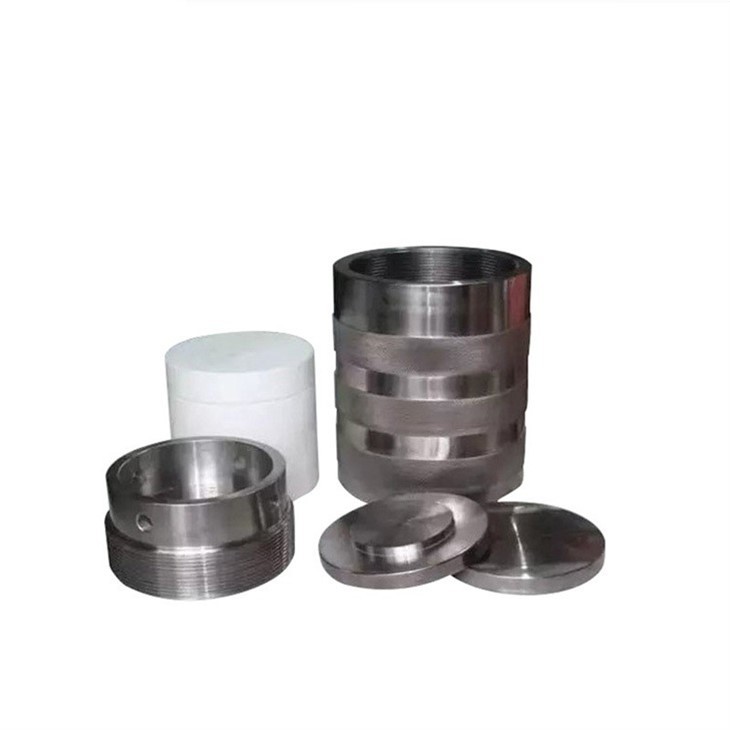
One of our popular products is the Hydrothermal Autoclave Reactor. This reactor is designed for high - pressure and high - temperature reactions, making it suitable for applications such as hydrothermal synthesis of nanomaterials. It is made of high - quality stainless steel, which provides excellent corrosion resistance and durability.
We also offer the 5l Lifting Glass Reactor. This reactor is made of borosilicate glass, which has excellent chemical resistance and transparency. The lifting mechanism allows for easy cleaning and maintenance of the reactor. It is commonly used in laboratories and small - scale production for reactions that require precise control of temperature and mixing.
Another product in our portfolio is the Chemglass Reactor. This reactor is designed for chemical synthesis and research applications. It features a jacketed design for efficient temperature control and a variety of ports for adding reactants and measuring parameters.
8. Conclusion and Call to Action
In conclusion, batch chemical reactors are versatile and important pieces of equipment in the chemical industry. Understanding how they work is crucial for optimizing the reaction process, improving product quality, and increasing production efficiency.
If you are in the market for a high - quality batch chemical reactor, we are here to help. Our team of experts can provide you with detailed information about our products, assist you in selecting the right reactor for your specific application, and offer technical support throughout the purchasing process. Contact us today to start a discussion about your reactor needs and explore the possibilities of working together.

References
- Levenspiel, O. (1999). Chemical Reaction Engineering. John Wiley & Sons.
- Fogler, H. S. (2006). Elements of Chemical Reaction Engineering. Prentice Hall.
- Smith, J. M., Van Ness, H. C., & Abbott, M. M. (2005). Introduction to Chemical Engineering Thermodynamics. McGraw - Hill.


