

Hey there! As a Spring Tester supplier, I'm super stoked to share some insights on how to test Spring Boot configuration with Spring Tester. It's a topic that's not only crucial but can also save you tons of headaches down the road.
First off, let's talk about why testing Spring Boot configuration is so important. Spring Boot makes it incredibly easy to set up and run applications, but with that ease comes the risk of misconfigurations. These misconfigurations can lead to all sorts of issues, from minor glitches to major system failures. That's where Spring Tester comes in. It provides a set of tools and utilities that help you verify that your Spring Boot configuration is working as expected.
One of the first steps in testing Spring Boot configuration is to understand the different types of configuration you might have. You've got application properties, which are often stored in application.properties or application.yml files. These files contain key - value pairs that define various aspects of your application, like database connections, server ports, and logging levels.
Another important type of configuration is Java - based configuration using annotations like @Configuration and @Bean. These classes allow you to define beans and other application components in a more programmatic way.

Now, let's dig into the actual testing process. One of the simplest ways to test Spring Boot configuration is to use the @SpringBootTest annotation. This annotation tells Spring Boot to load the entire application context, which includes all your configured beans and properties.
import org.junit.jupiter.api.Test;
import org.springframework.boot.test.context.SpringBootTest;

@SpringBootTest
class MyApplicationConfigurationTest {

    @Test
    void contextLoads() {
        // This test simply checks if the application context can be loaded
    }
}
In this example, the contextLoads test is a basic sanity check. If the test passes, it means that Spring Boot was able to load the application context without any issues. However, this test doesn't really verify the actual values of your configuration.
To test the values of your application properties, you can use the @TestPropertySource annotation. This annotation allows you to override the values of your application properties for the duration of the test.
import org.junit.jupiter.api.Test;
import org.springframework.beans.factory.annotation.Value;
import org.springframework.boot.test.context.SpringBootTest;
import org.springframework.test.context.TestPropertySource;

@SpringBootTest
@TestPropertySource(properties = "my.property=test-value")
class MyPropertyTest {

    @Value("${my.property}")
    private String myProperty;

    @Test
    void testMyProperty() {
        assert myProperty.equals("test-value");
    }
}
In this example, we're overriding the value of my.property with test-value for the test. Then, we're injecting the value of my.property into the myProperty field using the @Value annotation and verifying that the value is correct.
When it comes to testing Java - based configuration, you can use Spring's ApplicationContext to retrieve the beans you've defined.
import org.junit.jupiter.api.Test;
import org.springframework.beans.factory.annotation.Autowired;
import org.springframework.boot.test.context.SpringBootTest;
import org.springframework.context.ApplicationContext;

@SpringBootTest
class MyJavaConfigTest {

    @Autowired
    private ApplicationContext applicationContext;

    @Test
    void testMyBean() {
        Object myBean = applicationContext.getBean("myBean");
        assert myBean != null;
    }
}
In this example, we're using the ApplicationContext to retrieve a bean named myBean and verifying that it exists.
Now, let's talk about some real - world scenarios. Suppose you're working on a project that involves a chemical reactor, like the 50L Explosion - proof Stainless Steel Reactor. You might have a Spring Boot application that controls the temperature and pressure of the reactor. You'd want to test the configuration related to the sensors and actuators that interact with the reactor.
You could write tests to verify that the correct sensor values are being read and that the actuators are being controlled properly based on the configuration. For example, you could use a test property source to simulate different sensor readings and check if the application responds as expected.
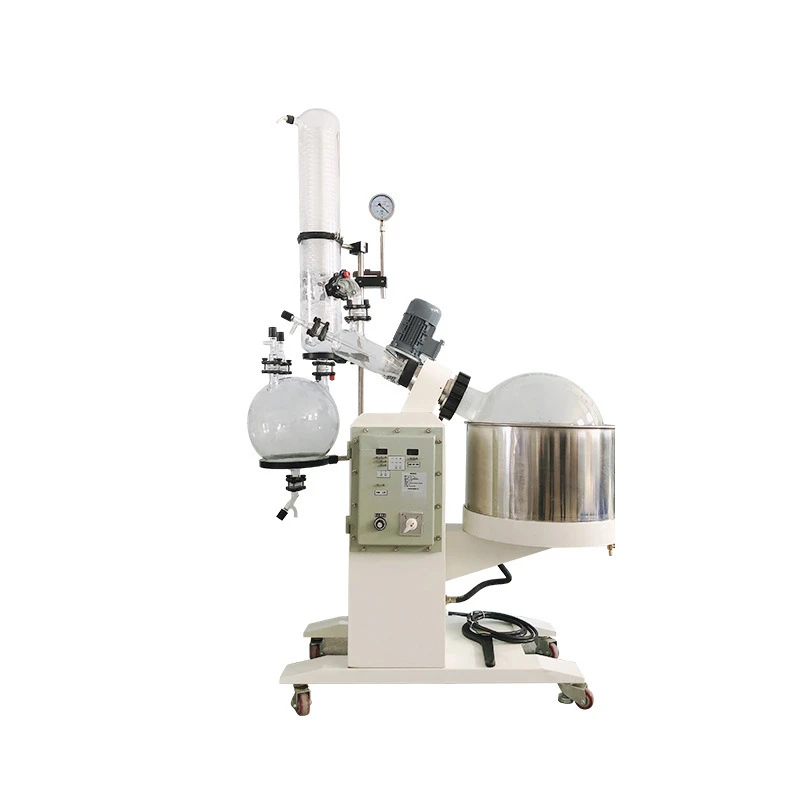
Another scenario could involve a rotary evaporator, such as the 50l Rotary Evaporator. Your Spring Boot application might be responsible for controlling the speed and temperature of the evaporator. You'd need to test the configuration related to these control parameters to ensure that the evaporator operates safely and efficiently.
And if you're in the pharmaceutical industry, you might be using an Intelligent Disintegration Tester. You could write tests to verify the configuration of the tester, such as the test time, temperature, and agitation settings.
In conclusion, testing Spring Boot configuration with Spring Tester is an essential part of the development process. It helps you catch misconfigurations early, which can save you a lot of time and effort in the long run. Whether you're working on a project related to chemical reactors, rotary evaporators, or pharmaceutical testing equipment, the principles of testing Spring Boot configuration remain the same.
If you're interested in learning more about Spring Tester or have a specific testing need for your Spring Boot application, don't hesitate to reach out. We're here to help you ensure that your applications are configured correctly and running smoothly. Let's start a conversation about how we can meet your testing requirements and take your projects to the next level.
References:
- Spring Boot Documentation
- JUnit 5 Documentation


