

Hey there! As a supplier of glass reactors, I often get asked a bunch of questions about what these nifty pieces of equipment can and can't do. One question that pops up quite a bit is, "Can a glass reactor be used for elimination reactions?" Well, let's dive right into it and find out.
What Are Elimination Reactions?
First off, let's quickly go over what elimination reactions are. In organic chemistry, an elimination reaction is a type of reaction where two substituents are removed from a molecule in either a one - or two - step mechanism. The most common types are E1 and E2 reactions.
In an E1 reaction, it's a two - step process. The leaving group first departs, forming a carbocation intermediate, and then a base removes a proton from an adjacent carbon atom, leading to the formation of a double bond. On the other hand, an E2 reaction is a one - step process where the leaving group departs and a proton is removed simultaneously by a base, resulting in the formation of a double bond.

Why Consider a Glass Reactor?
Now, why would you even think about using a glass reactor for these elimination reactions? Well, glass reactors come with a whole bunch of advantages. For starters, glass is highly resistant to corrosion. Most of the reagents used in elimination reactions, like strong bases or acids, won't eat away at the glass. This means you can use a wide variety of chemicals without having to worry about the reactor getting damaged.
Another great thing about glass reactors is that they are transparent. You can actually see what's going on inside the reactor during the reaction. This is super useful for monitoring the progress of the elimination reaction, checking for any signs of side reactions, or just making sure everything is going as planned.
Using a Glass Reactor for Elimination Reactions
So, can you really use a glass reactor for elimination reactions? The answer is a big yes! Let's break down the steps and see how it works.
Setup
First, you need to set up your glass reactor properly. Make sure it's clean and dry before you start. You'll also need to attach all the necessary accessories like condensers, stirrers, and thermometers. The condenser is important because many elimination reactions involve heating, and the condenser helps to prevent the loss of volatile reactants or products by condensing them back into the reactor.
Adding Reactants
Next, you add your reactants. For an elimination reaction, this usually means adding an alkyl halide or an alcohol (the substrate) and a strong base. You have to be careful when adding the base, especially if it's a concentrated one, because it can cause a rapid exothermic reaction. It's a good idea to add the base slowly while stirring the mixture.
Controlling the Reaction Conditions
Temperature control is crucial in elimination reactions. Depending on whether you're going for an E1 or E2 mechanism, the temperature can influence the reaction rate and the selectivity. You can use the temperature control system on your glass reactor to set the right temperature. For example, E1 reactions often require higher temperatures to form the carbocation intermediate, while E2 reactions can occur at lower temperatures.
Stirring is also important. A good stirrer in your glass reactor ensures that the reactants are well - mixed. This helps to increase the reaction rate by bringing the reactant molecules into contact with each other more frequently.
Potential Challenges
Of course, using a glass reactor for elimination reactions isn't always a walk in the park. There are a few challenges you might face.
One issue is the formation of solids or precipitates during the reaction. Some elimination reactions can produce salts or other solid by - products. These solids can clog the stirrer or the condenser, which can disrupt the reaction. To deal with this, you might need to use a larger glass reactor or add a filtration system.
Another challenge is the pressure build - up. If the reaction produces gases, the pressure inside the glass reactor can increase. You need to have a pressure relief system in place to prevent the reactor from bursting.
Other Equipment in Our Arsenal
While we're on the topic of chemical equipment, I'd like to mention a few other products we offer. We have the Digital Tablet Friability Tester, which is great for testing the durability of tablets in the pharmaceutical industry. It gives you accurate results on how well tablets can withstand abrasion.
We also have the Paint Disperser Machine. This machine is designed to disperse pigments and other additives in paint, ensuring a uniform and high - quality product.
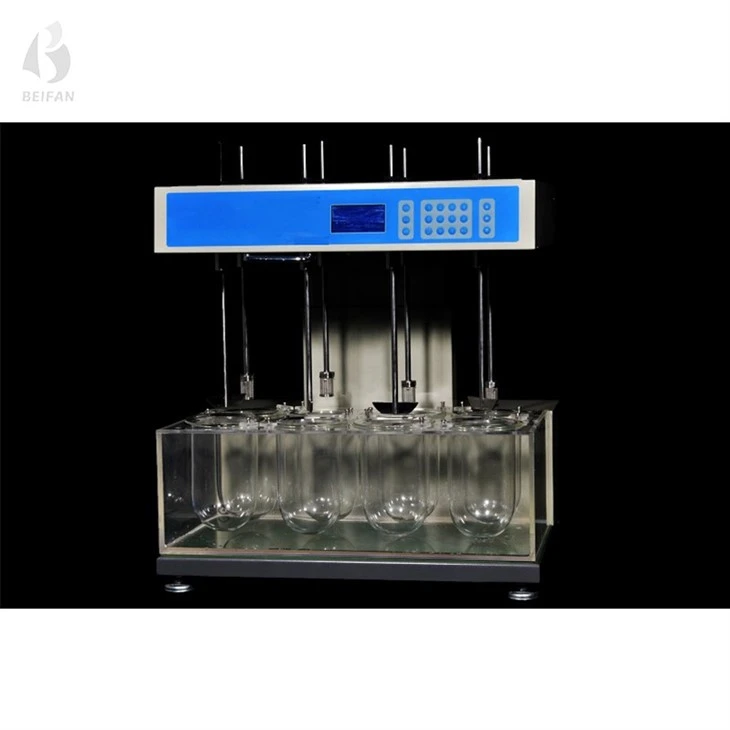
And for those in the pharmaceutical field, our Capsule Dissolution Tester is a must - have. It helps to determine the rate at which capsules dissolve, which is an important factor in drug efficacy.
Conclusion
In conclusion, a glass reactor can definitely be used for elimination reactions. Its corrosion resistance, transparency, and the ability to control reaction conditions make it a great choice for these types of reactions. However, you need to be aware of the potential challenges and take the necessary precautions.
If you're in the market for a glass reactor or any of the other equipment I mentioned, don't hesitate to reach out. We're here to help you find the right solution for your specific needs. Whether you're a small - scale researcher or a large - scale manufacturer, we've got you covered.
References
- Organic Chemistry textbooks, such as "Organic Chemistry" by Paula Y. Bruice.
- Chemical engineering literature on reactor design and operation.


