

In the field of materials science and engineering, the tensile test is a fundamental and widely - used method to evaluate the mechanical properties of materials. One of the crucial parameters obtained from a tensile test is the strain hardening exponent. In this blog, as a Tensile Tester supplier, we'll delve deep into what the strain hardening exponent is, its significance, and how it impacts materials in various applications.
What is the Tensile Test?
Before we address the strain hardening exponent, let's first understand the tensile test. The tensile test is a process where a standard - sized specimen of a material is placed in a Tensile Tester, a machine designed specifically for this purpose. The machine then applies a uniaxial force to the specimen, gradually increasing the load until the specimen breaks. During this process, various data such as the applied force and the corresponding deformation (strain) of the specimen are recorded. This data is then used to generate a stress - strain curve, which is a graphical representation of how the material responds to the applied stress.
Understanding the Stress - Strain Curve
The stress - strain curve is divided into several regions. Initially, there is an elastic region where the material deforms elastically. This means that when the load is removed, the material returns to its original shape. The slope of this region is known as the Young's modulus, which represents the stiffness of the material.
As the load increases, the material enters the plastic deformation region. In this region, the material undergoes permanent deformation even after the load is removed. The transition from elastic to plastic deformation is marked by the yield point. Beyond the yield point, the material continues to deform plastically, and the stress - strain relationship becomes non - linear. This is where the strain hardening phenomenon occurs.
Defining the Strain Hardening Exponent
The strain hardening exponent, often denoted as "n", is a measure of how a material hardens during plastic deformation. Mathematically, it is defined by the power - law relationship between true stress (σ) and true strain (ε) in the plastic region of the stress - strain curve. The equation is given by:
σ = Kεⁿ
where K is the strength coefficient, which represents the stress at a true strain of 1. The strain hardening exponent "n" ranges from 0 to 1. A value of n = 0 means that the material does not strain - harden at all, and it deforms in a perfectly plastic manner. On the other hand, a value of n = 1 indicates that the material behaves like a perfectly elastic - perfectly plastic solid during the initial stages of plastic deformation.

Significance of the Strain Hardening Exponent
The strain hardening exponent is of great significance in materials engineering for several reasons.
- Formability Prediction: In metal forming processes such as rolling, forging, and deep - drawing, the strain hardening exponent plays a crucial role. A higher value of n indicates better formability because the material can withstand more deformation before necking occurs. Necking is a localized reduction in the cross - sectional area of the specimen, which eventually leads to fracture. Materials with high n values can distribute the deformation more evenly, reducing the likelihood of premature failure during forming operations.
- Strength and Ductility Balance: The strain hardening exponent helps in achieving a balance between strength and ductility. As the material deforms plastically, the strain hardening mechanism increases its strength. At the same time, a good strain hardening behavior allows the material to continue deforming without fracturing, thus maintaining its ductility. This is particularly important in applications where both strength and the ability to deform are required, such as in automotive body parts and aerospace components.
- Material Selection: When selecting materials for specific applications, the strain hardening exponent is an important consideration. For example, in applications where high - strength and high - ductility are needed, materials with relatively high strain hardening exponents are preferred. On the other hand, for applications where simplicity of forming and minimal strain hardening are desired, materials with low n values might be more suitable.
Measuring the Strain Hardening Exponent
To measure the strain hardening exponent, a Tensile Tester is used to obtain the stress - strain data. The true stress and true strain values in the plastic region are then plotted on a logarithmic scale. The slope of the resulting straight line is the strain hardening exponent "n".
As a Tensile Tester supplier, we offer a range of high - quality testing machines that are capable of accurately measuring the stress - strain data required for calculating the strain hardening exponent. Our machines are equipped with advanced sensors and software that can precisely record the applied force and the corresponding deformation, ensuring reliable and accurate results.
Related Equipment and Their Roles
In addition to Tensile Testers, there are other types of equipment in the industrial field that play important roles in material processing and testing. For example, the Lifting Disperser Machine is used in the dispersion of various substances. It can effectively break down agglomerates and ensure a homogeneous distribution of particles in a liquid medium. This is crucial in industries such as paint, coatings, and chemicals.
The Paint Disperser Machine is specifically designed for the paint industry. It helps in achieving a uniform dispersion of pigments and additives in the paint matrix, which is essential for the quality and performance of the paint.
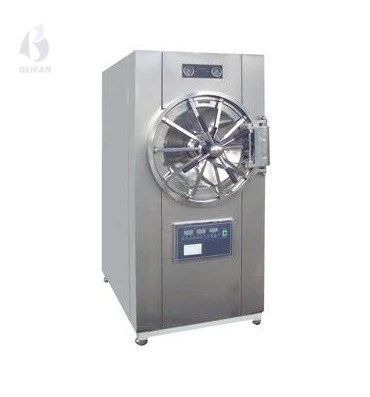
Another important piece of equipment is the Horizontal Cylindreical Pressure Steam Sterilizer. It is used for sterilizing medical equipment, laboratory instruments, and other items by using high - pressure steam. This is crucial in maintaining a sterile environment in medical and scientific settings.
Impact on Industrial Applications
Different industries benefit from understanding and controlling the strain hardening exponent. In the automotive industry, for instance, suppliers aim to produce body panels with high n values. This allows the panels to be formed into complex shapes during manufacturing while maintaining sufficient strength to withstand impacts during use.
In the construction industry, materials like steel with appropriate strain hardening exponents are used in structural components. The strain hardening behavior of steel helps it to absorb energy during earthquakes or other dynamic loading conditions, enhancing the safety of the building.
Contact for Purchase and Consultation
As a professional Tensile Tester supplier, we are dedicated to providing the best equipment and technical support for your material testing needs. Whether you are a research institution looking for precise testing data or a manufacturing company aiming to improve product quality, our Tensile Testers can meet your requirements.
If you are interested in our products or have any questions about the strain hardening exponent or the tensile test, please feel free to contact us for further purchase discussions and consultations. We look forward to collaborating with you to achieve your goals in materials science and engineering.
References
- Callister, W. D., & Rethwisch, D. G. (2018). Materials Science and Engineering: An Introduction. Wiley.
- Dieter, G. E. (1986). Mechanical Metallurgy. McGraw - Hill.
- Shackelford, J. F. (2008). Introduction to Materials Science for Engineers. Pearson Prentice Hall.


