

Hey there! I'm a supplier of Lab Ball Mills, and I often get asked, "Which type of lab ball mill is more suitable for fine grinding?" Well, that's what we're gonna talk about today.
First off, let's understand what fine grinding is. Fine grinding is all about reducing the particle size of materials to a very small scale. It's crucial in many industries like pharmaceuticals, ceramics, and materials science. In these fields, the quality of the final product often depends on how well the materials are ground.
Now, let's dive into the different types of lab ball mills.
Planetary Ball Mills
Planetary ball mills are super popular for fine grinding. They work by having one or more grinding jars mounted on a rotating disk. As the disk spins, the jars rotate in the opposite direction, creating a high - energy grinding environment.
The cool thing about planetary ball mills is that they can generate extremely high centrifugal forces. This means that the grinding balls inside the jars can hit the materials with a lot of force, breaking them down into very fine particles. They're great for grinding hard and brittle materials like minerals and ceramics.

For example, if you're working in a ceramics lab and you need to grind some raw materials to make high - quality ceramic products, a planetary ball mill can do the job. It can reduce the particle size of the ceramic powders to a few micrometers or even nanometers, which is essential for getting good - quality ceramics.
However, planetary ball mills also have some drawbacks. They can be a bit noisy during operation, and they require careful balancing to avoid excessive vibration. Also, the grinding jars and balls need to be selected carefully according to the material being ground to prevent contamination.
Vibratory Ball Mills
Vibratory ball mills are another option for fine grinding. They work by vibrating the grinding chamber, causing the grinding balls to move around and crush the materials.
One of the advantages of vibratory ball mills is that they can operate continuously. This makes them suitable for large - scale fine grinding tasks. They're also relatively easy to operate and maintain.
In a pharmaceutical lab, for instance, a vibratory ball mill can be used to grind drugs into fine powders. This is important for improving the solubility and bioavailability of the drugs. The continuous operation of the vibratory ball mill allows for a steady production of fine drug powders.
But vibratory ball mills may not be as efficient as planetary ball mills in terms of achieving extremely fine particle sizes. They also tend to generate more heat during operation, which can be a problem if the material being ground is heat - sensitive.
Attrition Ball Mills
Attrition ball mills are a bit different. They have a vertical shaft with impellers that stir the grinding media and the materials. The grinding action is mainly due to the shearing and impact forces generated by the moving impellers.
Attrition ball mills are great for grinding soft and fibrous materials. For example, if you're working with polymers or some organic materials, an attrition ball mill can be a good choice. It can break down the long - chain molecules of the polymers into smaller fragments, improving their properties.
However, attrition ball mills are generally more expensive than planetary and vibratory ball mills. They also require more power to operate, which can increase the running costs.
So, which one is more suitable for fine grinding? Well, it depends on several factors.
Factors to Consider
Material Properties
If you're dealing with hard and brittle materials, a planetary ball mill is likely your best bet. Its high - energy grinding action can effectively break down these materials into fine particles. On the other hand, if you're working with soft and fibrous materials, an attrition ball mill might be more appropriate. And for heat - sensitive materials, you may want to choose a vibratory ball mill and take some measures to control the heat, like using a cooling system.
Required Particle Size
If you need to achieve extremely fine particle sizes, say in the nanometer range, a planetary ball mill is usually the way to go. Its high - energy grinding can produce particles that are much smaller compared to the other types. But if you only need to reduce the particle size to a few micrometers, a vibratory ball mill or an attrition ball mill may be sufficient.
Production Scale
For small - scale fine grinding tasks in a research lab, a planetary ball mill or a small - sized vibratory ball mill can be enough. But if you're looking at large - scale production, a vibratory ball mill with continuous operation capabilities would be a better choice.
In addition to lab ball mills, we also offer other useful equipment for your lab. For example, if you're involved in drying processes, you might be interested in our Pilot Spray Dryer. It's a great tool for converting liquid materials into dry powders.
If you need to control the temperature during your experiments, our 50L High Temperature Oil Bath can be very helpful. It can provide a stable high - temperature environment for various processes.
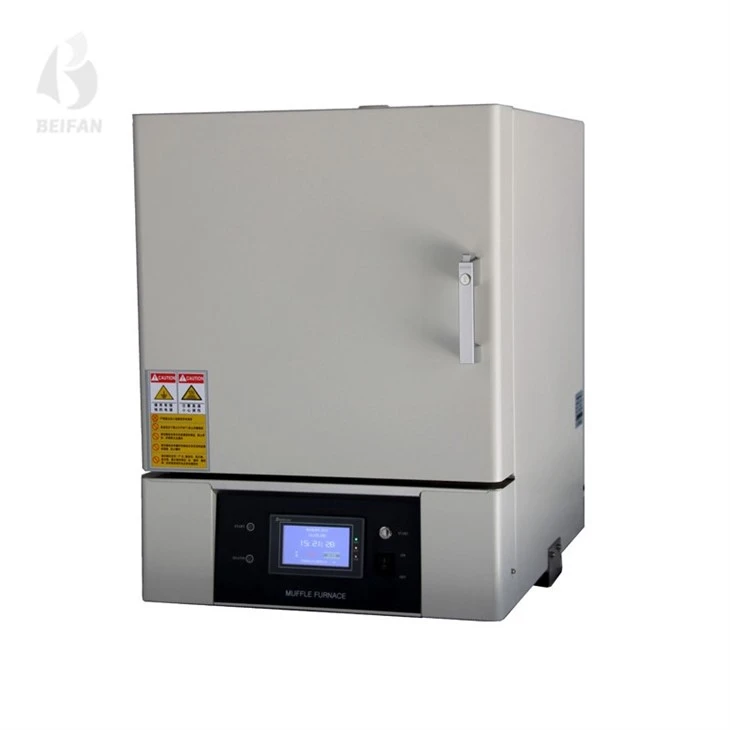
And for high - temperature heating tasks, our Ceramic Muffle Furnace is a reliable option. It can reach high temperatures and is suitable for heat - treating materials.
In conclusion, choosing the right type of lab ball mill for fine grinding depends on your specific needs. You need to consider the material properties, the required particle size, and the production scale. As a supplier of lab ball mills, we have a wide range of products to meet different requirements. If you're interested in our lab ball mills or other equipment, feel free to contact us for more information and to start a procurement discussion. We're here to help you find the best solutions for your fine - grinding and other lab needs.
References
- "Ball Milling: A Practical Guide" by John Smith
- "Advances in Fine Grinding Technology" by Mary Johnson
- "Laboratory Equipment Handbook" edited by David Brown


