

Alright, folks! If you're in the scientific or industrial field, chances are you've come across a Rotary Evaporator. It's a super handy piece of equipment used for separating solvents from samples through evaporation. But one question that often pops up is, "How do I estimate the evaporation time using a Rotary Evaporator?" Well, you're in luck because I'm here to break it down for you. And by the way, I'm from a Rotary Evaporator supplier, so I've got some insider knowledge to share.
Understanding the Basics of a Rotary Evaporator
Before we dive into estimating evaporation time, let's quickly go over how a Rotary Evaporator works. It consists of a rotating flask that holds the sample, a heating bath to heat the sample, a condenser to cool and condense the evaporated solvent, and a vacuum system to reduce the pressure inside the apparatus. The rotation of the flask increases the surface area of the sample, which speeds up the evaporation process. The vacuum lowers the boiling point of the solvent, allowing it to evaporate at a lower temperature.
Factors Affecting Evaporation Time
There are several factors that can affect the evaporation time when using a Rotary Evaporator. Let's take a look at each of them:
1. Solvent Properties
The type of solvent you're using plays a big role in determining the evaporation time. Different solvents have different boiling points and vapor pressures. Solvents with lower boiling points and higher vapor pressures will evaporate more quickly. For example, ethanol has a boiling point of 78.4°C and a relatively high vapor pressure, so it will evaporate faster than water, which has a boiling point of 100°C and a lower vapor pressure.
2. Sample Volume
The volume of the sample also affects the evaporation time. Generally, larger sample volumes will take longer to evaporate. This is because there is more solvent to be evaporated, and it takes more energy to heat and vaporize a larger amount of liquid.
3. Rotation Speed
The rotation speed of the flask can impact the evaporation time. A higher rotation speed increases the surface area of the sample, which allows for more efficient evaporation. However, there is a limit to how fast you can rotate the flask. If the rotation speed is too high, the sample may splash or foam, which can cause problems.
4. Temperature of the Heating Bath
The temperature of the heating bath is another important factor. Higher temperatures will increase the rate of evaporation, but you need to be careful not to overheat the sample. Some samples may decompose or react at high temperatures, so it's important to choose a temperature that is appropriate for your solvent and sample.
5. Vacuum Level
The vacuum level inside the Rotary Evaporator is crucial. A lower pressure reduces the boiling point of the solvent, which speeds up the evaporation process. However, creating a very high vacuum can be time-consuming and may require a more powerful vacuum system.
Estimating Evaporation Time
Now that we understand the factors that affect evaporation time, let's talk about how to estimate it. There's no one-size-fits-all formula for estimating evaporation time, but you can use the following steps as a guide:
Step 1: Determine the Solvent Properties
Look up the boiling point and vapor pressure of the solvent you're using. You can find this information in chemical reference books or online databases. This will give you an idea of how easily the solvent will evaporate.
Step 2: Measure the Sample Volume
Use a graduated cylinder or other measuring device to determine the volume of the sample. This will help you estimate how much solvent needs to be evaporated.
Step 3: Set the Rotation Speed and Temperature
Based on the properties of your solvent and sample, choose an appropriate rotation speed and heating bath temperature. Start with a moderate rotation speed and temperature and adjust as needed.
Step 4: Set the Vacuum Level
Gradually increase the vacuum level inside the Rotary Evaporator. Monitor the evaporation process and make sure the sample is not boiling too vigorously.
Step 5: Monitor the Evaporation
Keep an eye on the sample as it evaporates. You can use a sight glass or other visual indicator to see how much solvent has been evaporated. Note the time it takes for the solvent to reach a certain level or to completely evaporate.
Step 6: Make Adjustments
If the evaporation time is longer than expected, you may need to adjust the rotation speed, temperature, or vacuum level. You can also try increasing the surface area of the sample by using a larger flask or a different type of flask.
Using Past Experience and Data
One of the best ways to estimate evaporation time is to use past experience and data. If you've used the same solvent and sample in the past, you can refer to your previous records to get an idea of how long it took to evaporate. You can also collect data from multiple experiments and use it to create a calibration curve or a mathematical model to predict evaporation time.
Other Tips for Efficient Evaporation
Here are some additional tips to help you achieve more efficient evaporation:
- Preheat the Heating Bath: Before adding the sample, preheat the heating bath to the desired temperature. This will reduce the time it takes for the sample to reach the boiling point.
- Use a Cold Trap: A cold trap can be used to collect any solvent vapor that escapes the condenser. This helps to prevent the solvent from entering the vacuum system and causing damage.
- Clean the Apparatus Regularly: A clean Rotary Evaporator will work more efficiently. Make sure to clean the flask, condenser, and other parts of the apparatus after each use.
Related Equipment
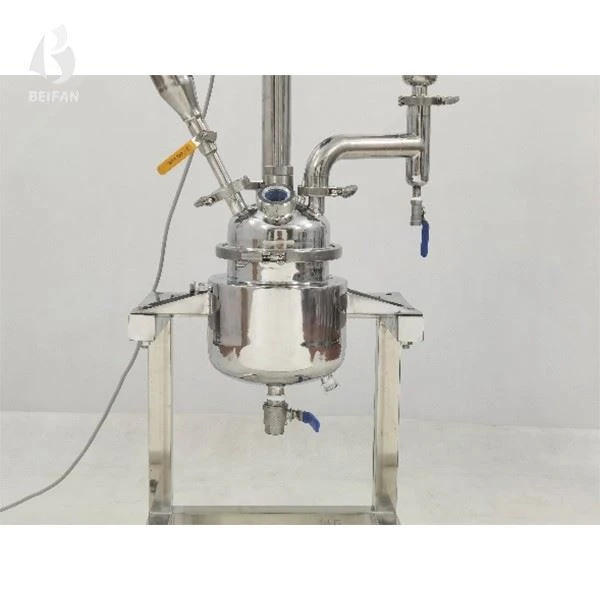
If you're in the market for other laboratory equipment, we also offer some great options. Check out our Benchtop Tablet Friability Tester, which is perfect for testing the friability of tablets. We also have a 20L Jacketed Glass Reactor and a 2L Double-layer Stainless Steel Reactor for your chemical reaction needs.

Contact Us for More Information
Estimating the evaporation time using a Rotary Evaporator takes a bit of practice and experimentation. By understanding the factors that affect evaporation time and following the tips I've shared, you can improve the efficiency of your evaporation process. If you have any questions or need help choosing the right Rotary Evaporator for your needs, don't hesitate to contact us. We're here to help you get the most out of your equipment.
References
- Smith, J. (2018). Handbook of Chemical Solvents. Wiley.
- Brown, A. (2019). Laboratory Techniques in Chemistry. Oxford University Press.


